


Today's coffee cup reading culture is not only — or even primarily — about mystical belief. For millions of people worldwide, it is first and foremost entertainment: a playful, imaginative, social activity that offers fun, self-reflection, and connection. This shift toward viewing cup reading as entertainment has fueled a remarkable commercial renaissance, spawning apps, events, courses, and content industries worth hundreds of millions of dollars globally.
The Rise of Coffee Reading as Social Entertainment
Social Media Culture: Platforms like Instagram and TikTok have turned coffee cup reading into visual content. Creators post short, accessible videos showing the reading process — the dramatic reveal of the cup, the symbolic interpretation, the reactions. These videos regularly rack up millions of views, introducing the tradition to entirely new audiences who encounter it first as entertainment rather than cultural practice.
Party and Event Culture: Coffee cup reading has become a popular entertainment offering at parties, weddings, corporate events, and team-building activities. Professional readers are hired the way entertainers or DJs might be, providing interactive, personalized entertainment that guests find memorably fun. This events-based market is particularly strong in Turkey, Greece, the Gulf region, and increasingly in the United States and Europe.
Dating and Social Bonding: Coffee cup reading offers a unique social ritual for bonding with new acquaintances. The intimacy of having someone "read" your cup — combined with the playfulness of not taking it too seriously — makes it an ideal activity for dates, girls' nights, and friend gatherings. This social function explains much of its popularity in urban, millennial and Gen Z demographics.
The Global Fortune-Telling Market: Size and Growth
Market Size: The global psychic services market — which includes cup reading, tarot, astrology, palmistry, and other divination practices — was valued at approximately $2.2 billion USD in 2021 and is projected to reach approximately $3 billion USD by 2027, growing at a compound annual growth rate (CAGR) of around 5-6%.
Regional Distribution: The largest markets are the United States (the largest single market by revenue), the United Kingdom, Turkey, India, and Brazil. The Middle East and North Africa represent significant growth markets, with rising digital penetration enabling access to online psychic services.
Digital Disruption: The shift from in-person to digital fortune-telling services has been the defining market trend of the past decade. Online psychic platforms (Kasamba, Keen, etc.) have grown rapidly, but AI-powered apps represent the next generation of this disruption — with dramatically lower price points and 24/7 accessibility democratizing services that were once available only to those who could afford personal readers.
The Coffee Reading App Market
App Downloads: The category of "spiritual and divination" apps has seen consistent double-digit growth in app store downloads since 2018. Coffee-specific reading apps, while a subset of this category, have benefited disproportionately from the global popularity of coffee culture and the visual appeal of the cup reading format.
Key Drivers: Three factors have driven growth in coffee reading apps specifically:
1. AI advancement — Computer vision now allows genuine automated symbol recognition in coffee grounds, making AI readings substantially more accurate than early attempts.
2. Coffee culture boom — The global "third wave coffee" movement has elevated coffee's cultural status, creating a receptive audience for apps that deepen the coffee experience.
3. Mindfulness and self-reflection trends — The growing wellness market has created appetite for reflective practices, and cup reading fits naturally into this space.
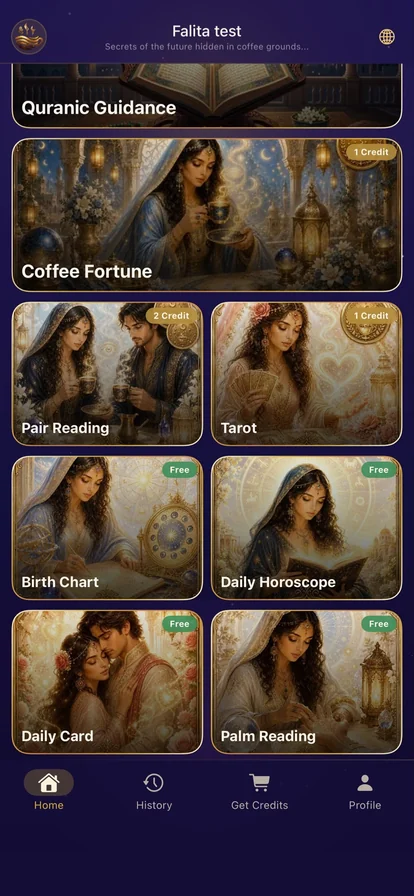
Falita's Positioning: Falita operates at the intersection of these trends, offering AI-powered coffee cup reading in four languages (English, Turkish, Persian, Arabic) — bridging tradition and innovation as examined in our study on AI vs human coffee readers and the folklore surrounding coffee cup reading predictions.
Coffee Reading Tourism and Experience Economy
Istanbul's Cup Reading Cafes: Istanbul has become the world's premier destination for coffee cup reading tourism. Dozens of specialty establishments — from historic cafes in the Grand Bazaar district to boutique "fal cafes" in neighborhoods like Karaköy and Cihangir — offer cup reading as their primary product. These establishments attract both Turkish customers and international tourists, with readings offered in multiple languages. Some premium establishments charge significant prices for lengthy personal readings from master practitioners.
Athens and Thessaloniki: Greek coffee reading experiences have also developed a tourism dimension, with cafes in both cities offering readings to visitors curious about the tradition.
Digital Tourism: Video content about visiting Istanbul's or Athens' cup reading cafes generates substantial YouTube and TikTok views, functioning as organic tourism marketing that drives further visitor interest.
Corporate Wellness Applications: Some HR and corporate wellness programs have begun incorporating coffee cup reading as a mindfulness and self-reflection activity — reframing the practice as a form of guided introspection rather than literal fortune-telling.
Coffee Reading Education and Training Market
Online Courses: Platforms like Udemy, Skillshare, and YouTube host dozens of coffee cup reading courses, ranging from introductory symbol guides to advanced interpretation techniques. Some popular courses have attracted tens of thousands of enrolled students.
Workshops and Masterclasses: In-person workshops by professional cup readers are popular in Turkey, Greece, Lebanon, and increasingly in Europe and North America. Weekend workshops in Istanbul's boutique hotels regularly sell out, attracting both locals and tourists.
Books and Digital Content: The market for coffee cup reading books, digital guides, and symbol reference apps generates significant revenue. Publishers in Turkey, Greece, Lebanon, and Iran regularly release new titles on the subject, and the category consistently performs well in regional bestseller lists.
Social Media: The Entertainment Engine of Modern Tasseography
Content Statistics: As of 2024, the hashtag #coffeereading has accumulated over 500 million impressions on Instagram. #tasseography generates millions of posts annually. On TikTok, coffee reading videos regularly achieve viral status, with some individual readings receiving tens of millions of views.
Creator Economy: A significant number of professional coffee cup readers have built full-time careers on social media. Top Turkish, Greek, and Iranian cup reading creators on YouTube and Instagram command audiences of hundreds of thousands to millions of followers, monetizing through ads, merchandise, private reading services, and courses.
Community Building: Beyond individual creators, cup reading has spawned active online communities — subreddits, Facebook groups, Discord servers — where practitioners share readings, discuss technique, and support each other. These communities foster the social bonding that has always been central to cup reading, now transposed into digital space.
The entertainment and commercial renaissance of coffee cup reading is one of the more fascinating stories in modern cultural economics. A 500-year-old tradition that could easily have remained a niche ethnic practice has instead expanded into a global entertainment phenomenon — powered by AI technology, social media, and the universal human delight in imaginative play. As Falita and similar platforms demonstrate, the ancient art of reading coffee grounds is anything but yesterday's news.
Frequently Asked Questions
The global psychic services market (including cup reading, tarot, astrology, and other divination) was valued at approximately $2.2 billion USD in 2021 and is projected to reach $3 billion by 2027. Coffee cup reading apps represent a growing segment of this market, driven by AI technology and global coffee culture.
Yes. The hashtag #coffeereading has accumulated over 500 million impressions on Instagram, and coffee reading videos regularly go viral on TikTok. Social media has been the primary driver of coffee reading's entertainment revival, introducing the tradition to entirely new global audiences.
Yes. Professional cup readers can build careers through in-person sessions, events bookings, social media content creation, online courses, and app-based readings. Top social media creators in Turkey, Greece, and Iran have built audiences of millions of followers and generate significant income from cup reading content.
Three factors drive the revival: AI technology enabling accurate digital readings; the global coffee culture boom elevating coffee's cultural status; and wellness and self-reflection trends creating appetite for introspective practices. Apps like Falita sit at the intersection of all three trends.