


The literature of coffee cup reading spans five centuries, from fragmentary medieval manuscripts to the smartphone-era guides of today. This body of writing reflects the tradition's evolution from an oral, communal practice to a codified art with its own textual canon — and it offers invaluable insight into how different cultures have understood and systematized the language of coffee grounds.
Victorian Era Foundations: Tea Leaf and Coffee Reading Classics
"Telling Fortunes by Tea Leaves" (1881)
This anonymous work — later attributed to various authors — was among the first English-language guides to systematically catalogue cup-reading symbols and their meanings. Though focused primarily on tea leaves, its symbolic vocabulary drew heavily from coffee cup reading traditions, and it established many of the interpretive conventions that later books would build upon.
"Reading Tea Leaves" (1920) by "A Highland Seer" (Cicely Kent)
One of the most widely read tasseography books of the 20th century, this work by Cicely Kent (writing under a pseudonym) provided clear, accessible guidance on reading tea cups. Its approachable style and comprehensive symbol dictionary made it a bestseller that remains in print today. The methodology applies equally to coffee grounds.
"The Romany Way" (1927) by Gipsy Petulengro
This work by the Romani fortune-teller and newspaper columnist brought the Romani cup-reading tradition to a mainstream British audience. Petulengro's blend of folk wisdom and showmanship captured the Victorian and Edwardian public's imagination, and the book offers a fascinating glimpse into the popular culture of fortune-telling in the early 20th century.
Modern Guides and Reference Works
"The Art of Tea Leaf Reading" by Jane Lyle
A beautifully illustrated modern guide that treats cup reading as both a divinatory art and a tool for self-reflection. Lyle brings psychological depth to the traditional symbol dictionary, encouraging readers to use cup reading as a meditative practice for exploring their own intuitions and concerns.
"Fortune in a Coffee Cup" by Sophia
Focused specifically on coffee grounds reading rather than tea leaves, this guide offers a practical approach to tasseography with detailed symbol interpretations organized thematically. It has become a popular reference work for coffee reading enthusiasts.
"Tasseography: A Complete Guide" by various authors
Several comprehensive guides have appeared under similar titles, offering detailed encyclopedias of symbols and step-by-step instructions for reading technique. These works reflect the growing interest in coffee cup reading as both cultural practice and entertainment.
Turkish Language Literature on Kahve Falı
"Kahve Falı Rehberi" (Coffee Fortune Guide) and similar titles have been published in multiple editions by Turkish publishers, covering symbol interpretation, the history of the tradition, and practical guidance for beginners and advanced practitioners.
"Türk Kahvesinin Sırrı" (The Secret of Turkish Coffee)
A genre of books exploring the cultural, historical, and mystical dimensions of Turkish coffee and its cup reading tradition. These works locate coffee reading within the broader context of Ottoman social history and Turkish folk culture.
Academic texts in Turkish also examine coffee reading from anthropological and sociological perspectives, documenting regional variations in practice and the role of coffee reading in Turkish women's social networks.
Persian and Arabic Literature on Cup Reading
Persian Literature: Numerous books on fal-e qahveh (فال قهوه) have been published in Iran, covering both the practical techniques of reading and the cultural and mystical context of divination in Persian tradition. Some authors connect cup reading to classical Persian poetic concepts of fate, chance (bakhт), and the interpretation of signs.
Arabic Literature: Books on qira'at al-finjan (قراءة الفنجان) have been popular across the Arab world, particularly in Lebanon, Egypt, and the Gulf. These guides typically offer illustrated symbol dictionaries and positioning maps of the coffee cup, as well as discussions of the social and cultural dimensions of cup reading.
Online Resources: The internet has vastly expanded the Arabic and Persian literature on cup reading, with dedicated websites, video tutorials, and apps providing guidance in both languages to audiences worldwide.
Academic and Anthropological Works
"Coffee and Coffeehouses: The Origins of a Social Beverage in the Medieval Near East" by Ralph S. Hattox
Though not specifically about cup reading, this scholarly work provides essential context for understanding the social history of coffee culture in which tasseography developed.
UNESCO Documentation: The UNESCO submission documenting Turkish coffee culture includes ethnographic descriptions of cup reading practices that constitute an important scholarly resource.
Journal Articles: Numerous academic papers in anthropology, folklore, and cultural studies journals have examined coffee cup reading as a social practice, exploring its role in gender dynamics, community bonding, and the construction of cultural identity.
Digital Age: Apps, Websites, and New Formats
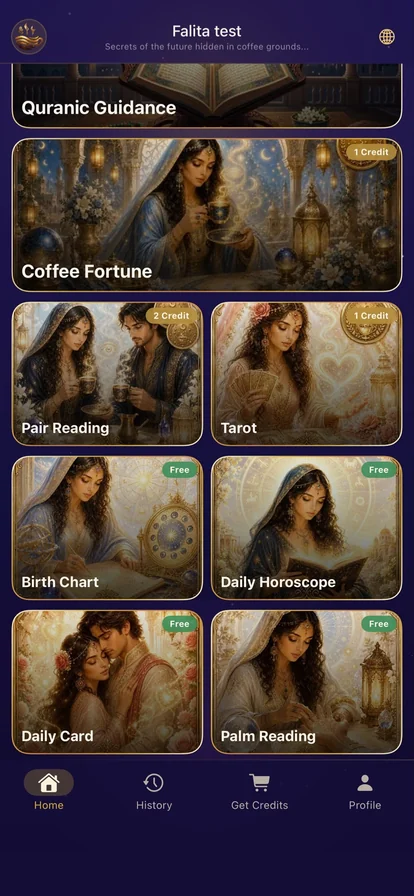
Apps like Falita incorporate extensive built-in symbol libraries, guidance on reading technique, and AI-powered interpretation — effectively functioning as interactive, personalized guidebooks available in four languages, exploring both coffee grounds symbols with AI and the rich history of coffee cup reading.
YouTube and TikTok have created a new generation of coffee reading educators, with channels dedicated to teaching interpretation technique amassing millions of subscribers. The visual nature of cup reading makes it particularly well-suited to video format.
Online communities on Reddit, Instagram, and dedicated forums allow practitioners to share readings, discuss symbol interpretations, and collectively develop the knowledge base of modern tasseography.
The literature of coffee cup reading, from Victorian parlor guides to AI-powered apps, reflects the tradition's remarkable journey across cultures and centuries. Whether you prefer the intimacy of a well-worn paperback or the immediacy of a smartphone app, the accumulated wisdom of five centuries of tasseography is more accessible today than it has ever been.
Frequently Asked Questions
"The Art of Tea Leaf Reading" by Jane Lyle and "Fortune in a Coffee Cup" by Sophia are among the most accessible and comprehensive modern guides. For a historical perspective, "Reading Tea Leaves" (1920) by Cicely Kent remains a classic reference. Apps like Falita also offer interactive guidance with AI interpretation.
Yes. There is a rich body of literature on coffee cup reading (kahve falı) in Turkish, covering symbol interpretation, history, and technique. In Persian, numerous books on fal-e qahveh (فال قهوه) have been published in Iran, connecting the practice to classical Persian literary and mystical traditions.
Yes. Coffee cup reading has been examined in anthropology, folklore studies, and cultural studies as a significant social practice. The UNESCO submission on Turkish coffee culture includes academic documentation of cup reading practices, and numerous journal articles have explored the tradition's role in social bonding and cultural identity.
Several books offer comprehensive symbol dictionaries, including "The Art of Tea Leaf Reading" by Jane Lyle. Apps like Falita also maintain extensive digital symbol libraries with AI-powered interpretation, making them effective interactive reference tools.